
Last updated September 25, 2026
ADU Design & Permitting Maintenance Checklist for Menifee Homeowners
The single most common reason a Menifee ADU resale gets delayed is a missing or unsigned final inspection card - a document that costs nothing to preserve and everything to reconstruct. In 2023, we reviewed eleven Menifee properties where the original permit packet had been lost to a garage flood, a divorce file purge, or simply a move to a new filing cabinet. Seven of those sales required re-inspections, two needed plan-set reproductions, and one triggered a full code-compliance review because the 2019 energy standards had changed. This guide treats your permit-close documents as a living maintenance record, not a folder to forget. You will learn exactly what to keep, how to maintain the structure against Menifee’s desert-edge climate, and how to protect the unit’s value when you sell or rent it.
Quick Answer
A complete ADU maintenance and permitting checklist for Menifee homeowners includes four preserved permit-close documents, five annual maintenance tasks tailored to high-dust and heat-cycling conditions, an updated insurance file with ADU-specific riders, and a pre-rental habitability review against California Civil Code. Start with the signed final inspection card and stamped approved plan set, then build a maintenance calendar around Santa Ana season and summer thermal expansion cycles.
Table of Contents
- The Exact Permit-Close Document Packet Menifee Homeowners Need
- Annual Maintenance Tasks for Menifee’s Desert-Edge Climate
- Updating Your Homeowner’s Insurance After CO Issuance
- How to Reconstruct Lost Permit Records Through Menifee Building & Safety
- Pre-Rental Checklist: California Habitability and Owner Protection
- Resale Preparation: What Buyers and Their Lenders Will Ask For
- Prefab and Modular ADU Maintenance Notes
- Common Mistakes to Avoid
- When to Call a Professional
- Frequently Asked Questions
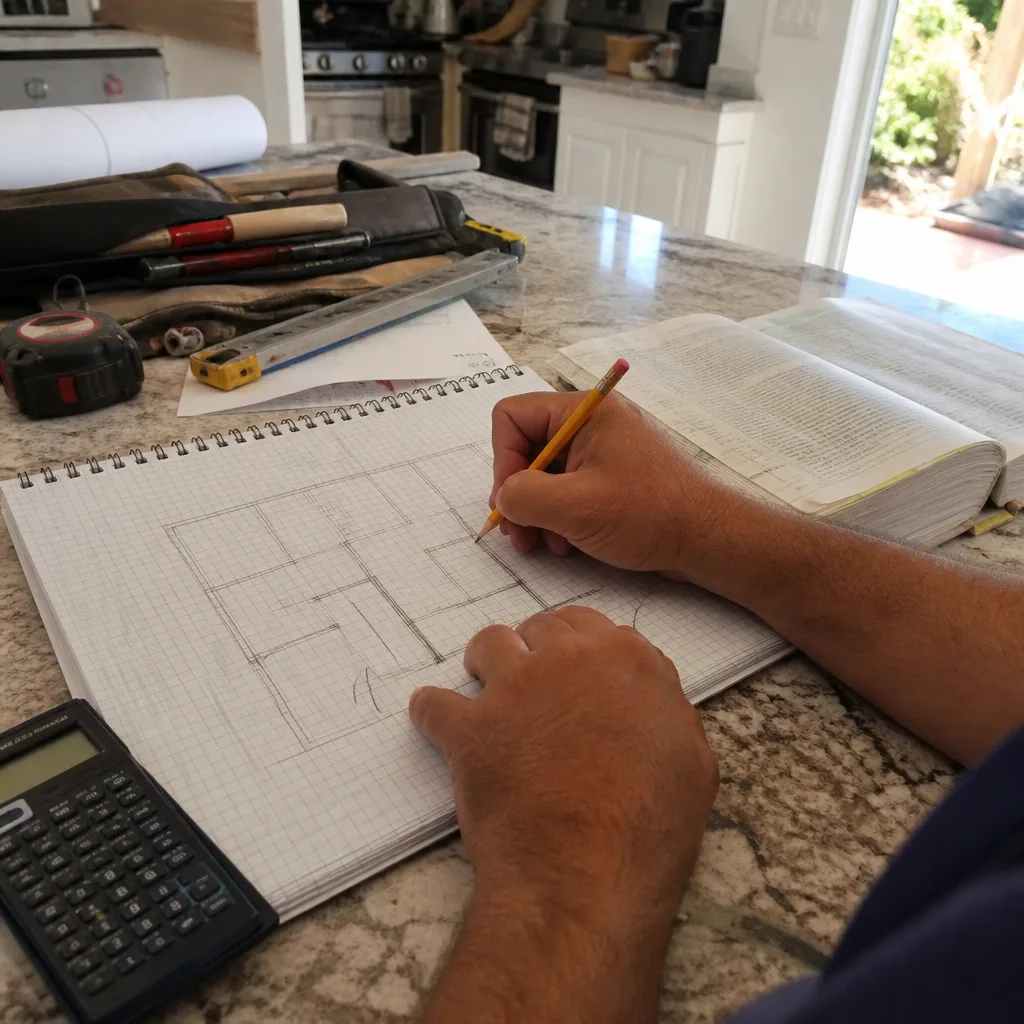
The Exact Permit-Close Document Packet Menifee Homeowners Need
Most ADU guides end at certificate of occupancy. We start there, because the documents you receive at permit close are the legal foundation of every future transaction involving the unit.
When Menifee Building & Safety signs off on your ADU, you should walk away with four specific items. If any are missing, your project is not fully closed.
The Four Required Documents
- Signed final inspection card. This is the green or gold card, signed by the field inspector, confirming that every required inspection - foundation, framing, insulation, mechanical, final - passed. In Menifee, this card is filed with Riverside County, but the homeowner should retain a photocopy with original signatures visible. Lenders and buyers’ agents will request this.
- Stamped approved plan set. The full architectural and structural drawings, stamped “Approved” by Menifee Building & Safety, showing the ADU as built. This is not the construction set your builder used; it is the version the city accepted, with any field revisions inked in and initialed.
- Energy compliance certificate (CF-1R and CF-2R). California’s Title 24 energy documentation. The CF-1R is the prescriptive or performance compliance form; the CF-2R is the field verification form, signed by a HERS rater or certified technician. Menifee enforces these strictly - we have seen resale transactions stall when the CF-2R signature is missing or the rater’s certification had lapsed.
- Structural calculations. For any ADU with engineered elements - trusses, shear walls, retaining walls, or hillside foundations - the stamped calculations from the structural engineer must accompany the plan set. Menifee’s geotechnical conditions in the foothill zones, particularly north of McCall Boulevard, often trigger these requirements.
We deliver these four documents in a labeled, acid-free binder at final walkthrough, with digital scans uploaded to a client portal. Under Ellery ADU Studio Menifee home standards, this is non-negotiable. The Haven Standard, Clause 3 (Documented Delivery), requires that every client receive the complete permit packet before final payment is processed.
Store the physical binder in a fire-resistant file box, not the garage. Menifee garage temperatures in July regularly exceed 115°F, accelerating paper degradation and adhesive failure on binder spines. The digital backup should live in cloud storage with version history, not just an email attachment.
Annual Maintenance Tasks for Menifee’s Desert-Edge Climate
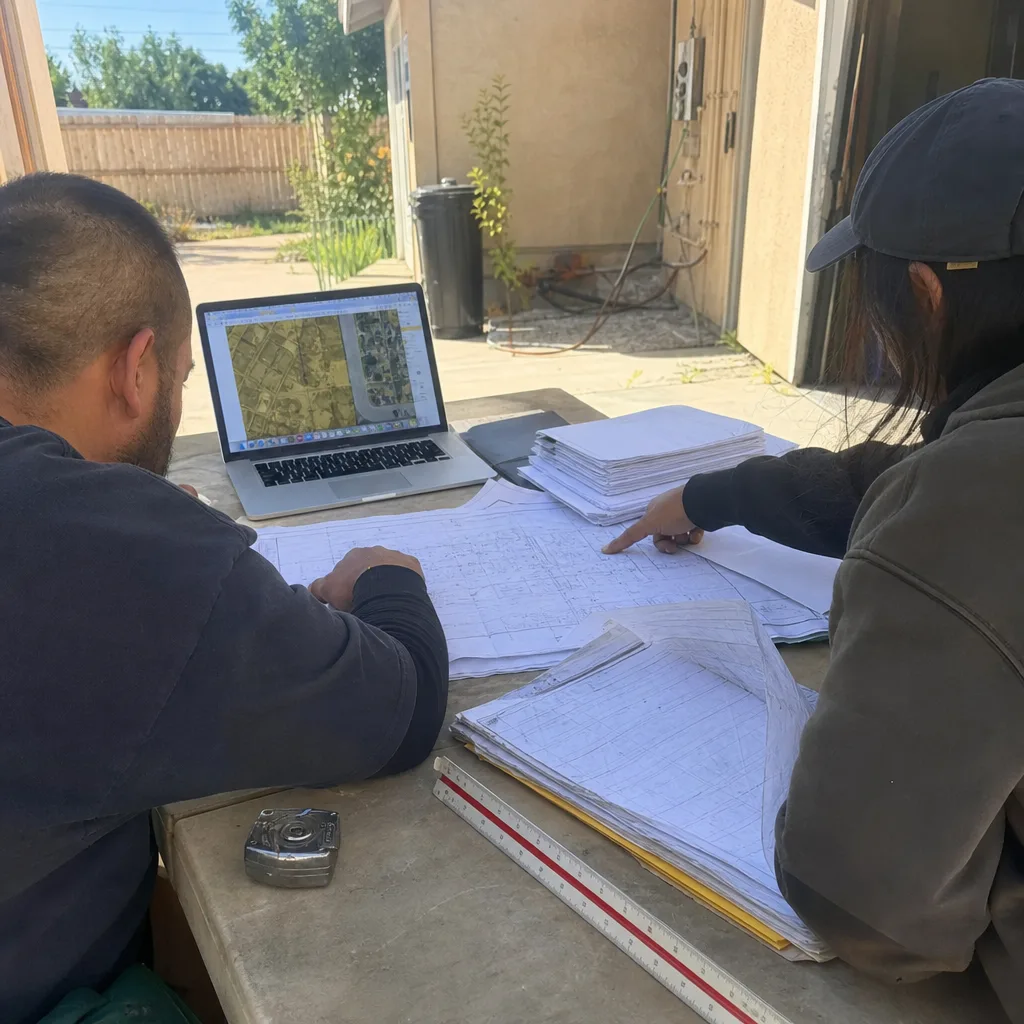
Menifee sits at the western edge of the Sonoran Desert influence, with summer highs routinely crossing 100°F, Santa Ana winds from October through March, and dust loading that exceeds coastal California by a factor of three. An ADU built to Menifee code will survive these conditions, but only with maintenance calibrated to the actual climate stressors.
HVAC Filter Cycles
Standard fiberglass filters rated for 90-day replacement last 45 days in Menifee. The high particulate load - agricultural dust from the Perris Valley, construction debris from ongoing development, and pollen from the Santa Ana River corridor - clogs media faster than manufacturer specifications assume. We specify MERV 8-11 pleated filters on our ADU Design & Permitting in Menifee projects, with a maintenance note to inspect monthly and replace every 60 days during Santa Ana season. A clogged filter forces the mini-split or furnace to work harder, shortening compressor life and voiding warranty coverage if the manufacturer requests maintenance records.
Stucco Joint Inspection Before Santa Ana Season
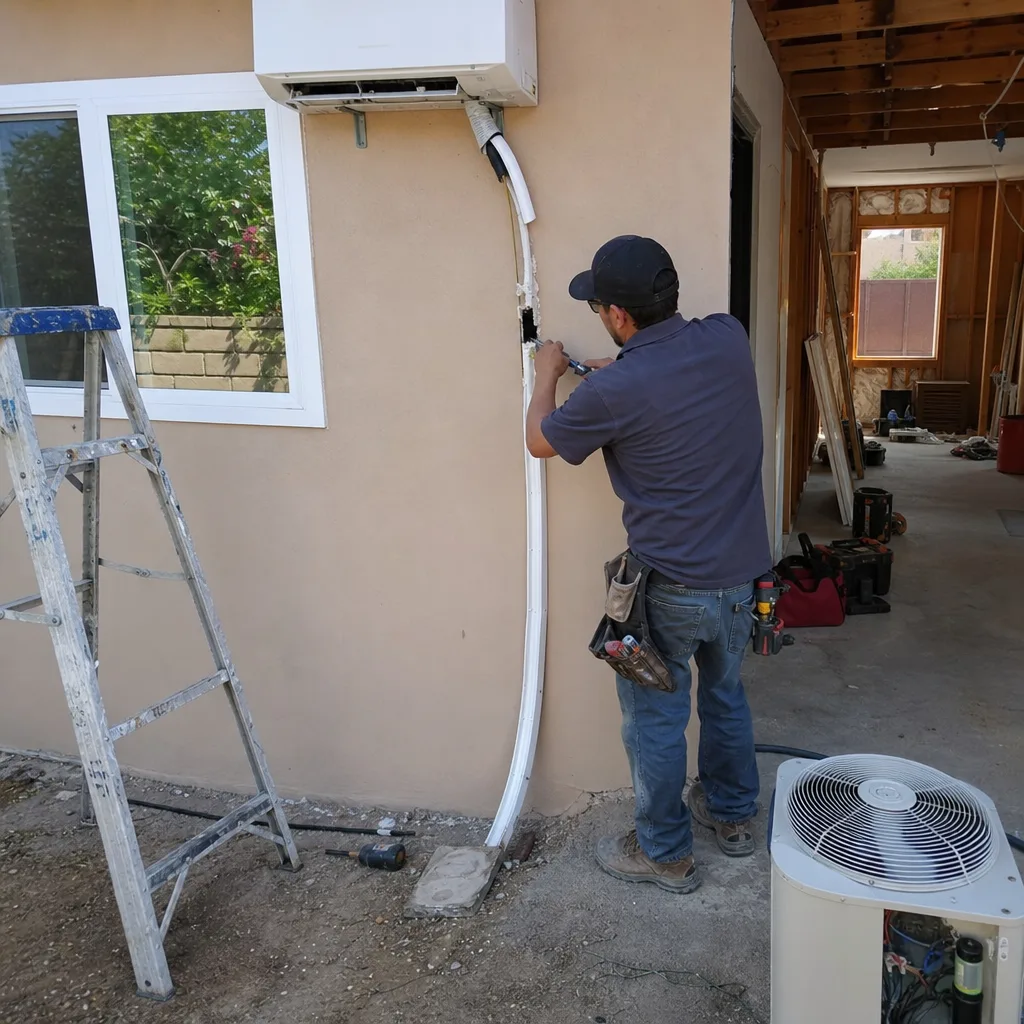
Menifee’s prevailing stucco systems - one-coat and three-coat over lath - expand and contract with thermal cycling. The critical failure points are control joints, around openings, and at the foundation sill plate. Inspect these in September, before the Santa Ana winds arrive with their combination of low humidity and sustained 40+ mph gusts. Hairline cracking is normal; cracks wider than 1/16 inch that extend through the brown coat indicate substrate movement or lath detachment. Seal hairline cracks with elastomeric caulk matched to the stucco color. Wider cracks need professional evaluation - water intrusion behind stucco in Menifee’s rare but intense winter rains causes mold and framing damage that is expensive to remediate.
Roof Membrane Checks After Summer Heat Cycles
For flat or low-slope ADU roofs - common on garage conversions and modern detached units - the thermoplastic polyolefin (TPO) or modified bitumen membrane undergoes significant thermal stress. Menifee’s 50°F daily temperature swings in summer cause membrane movement at seams and penetrations. Inspect in October, after the last major heat event:
- Walk the roof (or hire a technician; fall protection is required for slopes above 4:12).
- Check membrane seams for lifting, especially at HVAC curbs and vent stacks.
- Examine penetration flashings for cracked sealant or displaced termination bars.
- Clear drains and scuppers of dust accumulation - Menifee’s fine dust forms a sludge with the first rain that blocks drainage and ponds water.
On Garage Conversion ADU in Menifee projects, we often encounter existing garage roofs with inadequate slope. Our standard includes a structural overlay to achieve minimum 1/4:12 drainage, with a secondary overflow scupper. If your conversion retains the original roof plane, annual inspection is mandatory, not optional.
Water Heater Sediment Flush
Menifee’s municipal water supply, sourced from the Colorado River and local groundwater, carries higher mineral content than Northern California surface water. Tank water heaters accumulate sediment faster; tankless units scale at heat exchangers. Flush tank units annually, or install a sediment trap if not present. For tankless, descale every 18 months with food-grade vinegar or manufacturer-approved solution. We specify tankless units with isolation valves and flush ports on all our builds - the extra $80 in hardware saves $400 in service calls.
Window and Door Seal Inspection
Desert UV degrades weatherstripping faster than marine or forest climates. Inspect silicone seals and compression gaskets annually. On units with south- or west-facing glass - the dominant orientation for Menifee ADUs to capture winter sun - replace weatherstripping every 3-5 years, not the 7-10 year interval standard for coastal California.
Updating Your Homeowner’s Insurance After CO Issuance
A permitted, habitable ADU is not automatically covered under a standard homeowner’s policy. The coverage gap is real, and it opens the moment the certificate of occupancy issues.
Contact your insurance carrier within 30 days of CO issuance. Request a policy endorsement that specifically names the ADU as a covered structure, with replacement cost valuation matching the construction cost documented in your permit file. The key distinction: a non-permitted structure is often excluded entirely or covered only as “other structures” at 10% of dwelling coverage. A permitted ADU with independent utility meters may qualify for its own policy, which we recommend if you intend to rent it.
For rental ADUs, require tenants to carry renter’s insurance with liability coverage of at least $100,000, and name you as additional insured. This is standard practice in Menifee’s rental market, where ADUs command $1,400-$2,200 monthly depending on bedroom count and proximity to the 215 corridor.
Document the ADU’s features for your insurance file: square footage, construction type (stick-built, modular, or prefab), year built, electrical service amperage, and presence of fire sprinklers (required in Menifee for ADUs over 1,200 square feet or with more than two bedrooms). Photograph the electrical panel, water heater, and HVAC unit with serial numbers visible. Update this file if you replace major systems.
The Haven Standard, Clause 7 (Insurable Documentation), requires that we provide a one-page insurance summary at final walkthrough, listing these specifications in carrier-ready format. Most of our clients in the Menifee market have used this to obtain same-day endorsements.
How to Reconstruct Lost Permit Records Through Menifee Building & Safety
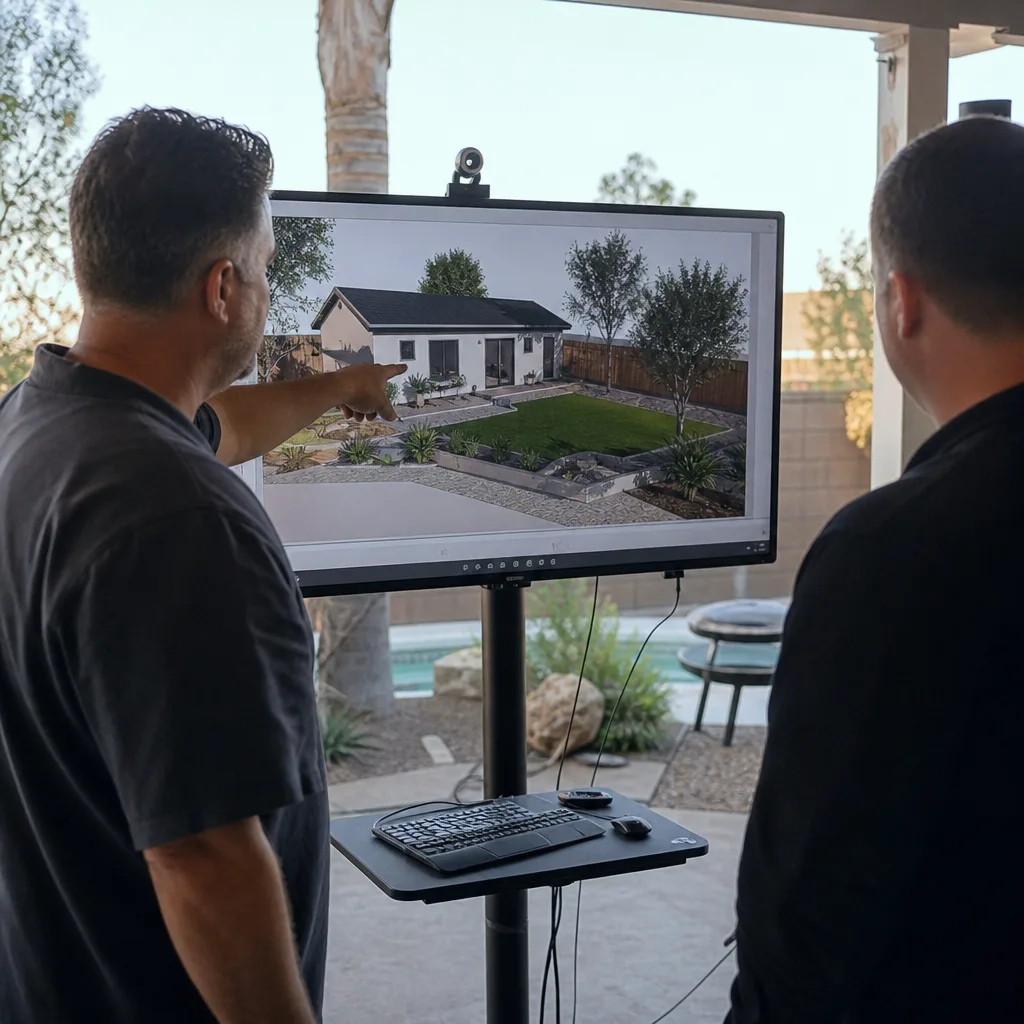
If your permit packet is lost, reconstruction is possible but not instantaneous. Understand the process before you need it.
- Identify the original permit number. This appears on the certificate of occupancy, property tax records, or the original building permit application. If you have none of these, Menifee Building & Safety can search by address, but the search fee applies.
- Submit a records request to Menifee Building & Safety. The city maintains microfilm and digital archives. As of 2024, the standard fee is $15 per permit search plus $0.50 per page for photocopies. Certified copies - required for most lender packages - are $25 per document.
- Timeline expectations. Routine requests process in 5-10 business days. Complex requests involving multiple permits or pre-digital records (before 2005 in Menifee) may take 4-6 weeks. Plan accordingly if you are listing the property.
- What you will receive. The city provides copies of inspection cards, approved plans, and energy certificates. They do not provide structural calculations unless explicitly filed with the city; engineers often retain these independently. If calculations are missing, you may need to hire a structural engineer to reproduce them from field measurements - a $1,500-$4,000 expense depending on complexity.
- When reconstruction fails. If no permit was ever pulled - a situation we encounter in Menifee’s unpermitted garage conversion stock - the path is legalization, not reconstruction. This requires current-code compliance, which may trigger requirements (seismic anchoring, energy efficiency, fire separation) that did not exist when the structure was built.
We have guided six Menifee clients through reconstruction or legalization in the past three years. The cost difference between preserved records and reconstructed compliance averages $8,400. The filing cabinet was cheaper.
Pre-Rental Checklist: California Habitability and Owner Protection
Renting your ADU triggers California Civil Code Section 1941.1, which defines minimum standards for habitability. Compliance is not optional, and documentation protects you from the most common tenant disputes we see in Riverside County small claims court.
Habitability Requirements
- Effective waterproofing and weather protection. Document roof condition, stucco integrity, and window seal status with dated photographs before move-in.
- Plumbing in good working order. Hot water at minimum 110°F, no chronic leaks, functional drainage. Video the water heater temperature test.
- Heating facilities. In Menifee, heating is required though cooling is not. Verify furnace or mini-split heat function; document BTU capacity relative to unit square footage.
- Electrical lighting and wiring. Functional outlets in every room, grounded circuits (GFCI in kitchens and baths, AFCI in bedrooms per current code), and adequate lighting. Photograph the panel with breaker map.
- Clean common areas and absence of vermin. Professional pest inspection before first tenancy; retain the report.
- Adequate trash receptacles. One 32-gallon bin per bedroom, minimum, with Menifee Waste Management service established.
- Working floors, stairs, and railings. No trip hazards, graspable handrails on stairs with four or more risers.
- Deadbolt locks on exterior doors and locking windows. Keyed alike or with master key system documented.
Owner Protection Documentation
Beyond habitability, protect yourself with:
- A written lease specifying ADU-specific terms: utility allocation (separate meters preferred), parking assignment, and use of outdoor space.
- Move-in condition report with tenant signature, including 50+ dated photographs.
- Proof of renter’s insurance with you named as additional insured.
- Notice of Menifee’s noise ordinance and quiet hours, particularly for ADUs near property lines in the Sun City or Quail Valley areas.
Our New Detached ADU in Menifee projects include a “rental readiness” package: the habitability checklist, photo template, and lease addendum language. This is not legal advice - we recommend review by a California landlord-tenant attorney - but it is the documentation package we wish every Menifee ADU owner had before their first tenant dispute.
Resale Preparation: What Buyers and Their Lenders Will Ask For
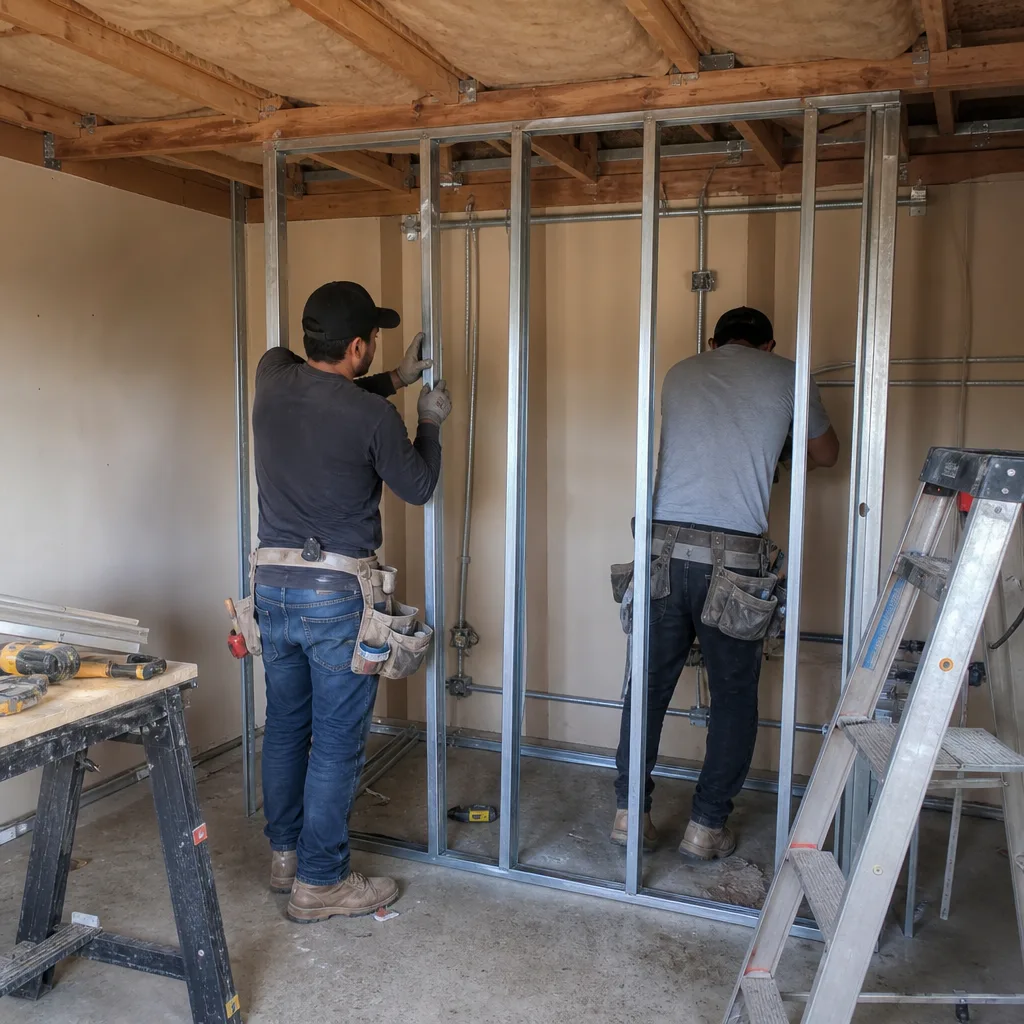
When you sell a Menifee property with an ADU, the buyer’s lender and the title company will request specific documentation. Prepare it six months before listing, not after you have a signed purchase agreement.
The standard request package includes:
- Permit history printout from Menifee Building & Safety. This confirms all permits are closed, no outstanding corrections exist, and the ADU square footage matches tax records. Discrepancies trigger appraisal problems.
- Certificate of occupancy or final inspection approval. Required for conventional financing; FHA and VA loans are stricter, requiring full code compliance documentation.
- Utility separation documentation. If the ADU has independent electric, gas, and water meters, provide the account establishment dates. If utilities are shared, disclose the allocation method in writing.
- HOA approval, if applicable. Menifee’s newer master-planned communities - Audie Murphy Ranch, Menifee Lakes - have HOA architectural committees that must approve ADUs. Lenders require evidence that the ADU was properly approved, not just that the HOA currently allows ADUs.
- Rental income documentation, if applicable. Two years of lease agreements and rent rolls for investment property loans. For owner-occupied sales, rental history supports value but is not always required.
Appraisers in the Menifee market increasingly use the paired-sales method for ADU valuation, comparing properties with and without ADUs. Your documentation supports the highest justifiable value. Missing permits force the appraiser to value the ADU as non-permitted space - typically 30-50% below permitted value, if included at all.
We maintain a resale documentation review service for past clients. Under the 365-Day Done Right Promise, if any documentation from our build is incomplete, we produce it at no charge.
Prefab and Modular ADU Maintenance Notes
Prefab and modular ADUs - systems from Abodu, Cover, Dvele, and others we specify - carry maintenance profiles distinct from site-built construction. The differences matter for long-term value preservation.
Factory-built units arrive with manufacturer warranties that require specific maintenance to remain valid. Abodu, for example, requires annual inspection of the structural connection between module and foundation, documented with photographs submitted through their warranty portal. Cover specifies sealant replacement at module-to-module joints every seven years. Dvele’s smart-home systems need firmware updates that the owner must authorize; failure to update can void the systems warranty even if the hardware functions.
We coordinate these requirements within our single-contract model, but post-occupancy maintenance falls to the owner. Create a manufacturer-specific maintenance calendar at move-in, separate from site-built maintenance tasks. The factory warranty is a valuable asset - we have seen Menifee owners lose $12,000 in coverage over a missed $200 sealant inspection.
For James Hardie siding systems, common on our custom detached ADUs in Menifee, the maintenance is lighter: annual inspection of caulked joints, touch-up of factory-finish nicks within 30 days, and power washing at low pressure every 2-3 years. The 30-year product warranty requires documentation that the siding was installed to manufacturer specifications - another reason to preserve the approved plan set and installation certificates.
Common Mistakes to Avoid
- Storing permit documents in the ADU itself. If the ADU floods, burns, or is broken into, the documents are gone. Keep them in the primary residence’s fire safe, with cloud backup.
- Assuming the city’s online permit lookup is sufficient. Menifee’s digital archive is incomplete for permits filed before 2010. The physical card in your hand is the only guaranteed record.
- Skipping the CF-2R in insurance updates. Carriers increasingly request HERS documentation for ADUs built under Title 24. Without it, they may apply a surcharge or exclude energy-efficient features from replacement cost.
- Treating a garage conversion ADU as maintenance-free. The existing slab, roof, and framing carry the original construction’s age and wear. Our Garage Conversion ADU in Menifee assessments include a 50-point existing conditions review for exactly this reason.
- Failing to update the property tax record. Riverside County assesses ADUs separately once permitted. Ensure the assessor’s square footage matches your permit - discrepancies create tax appeals and complicate sales.
- Ignoring Menifee’s weed abatement requirements for detached ADUs. The city enforces 100-foot clearance for structures in wildland-urban interface zones, which includes much of the terrain north and east of the city center. Non-compliance fines start at $250 and escalate.
- Renting without a written lease. Oral tenancy agreements are enforceable in California but nearly impossible to defend in habitability disputes. The written lease is for your protection, not just the tenant’s.
When to Call a Professional
Some maintenance tasks are homeowner-appropriate; others require licensed trades. Call a professional for: electrical panel work or circuit additions; structural cracking in stucco, foundations, or framing; roof membrane repairs or replacement; HVAC refrigerant handling or compressor replacement; and any permit reconstruction or legalization process.
For ADU-specific concerns - documentation gaps, resale preparation, or rental readiness review - ADU Design & Permitting in Menifee through Ellery ADU Studio Menifee offers free estimates. Call (951) 528-2967 to schedule. We provide a Free Second Opinion on any written estimate already in hand, and we answer calls with a live person 24/7.
Frequently Asked Questions
Menifee Building & Safety charges $15 per permit search plus $0.50 per page for standard copies, or $25 per document for certified copies. If structural calculations are missing and must be reproduced by an engineer, expect $1,500-$4,000. The total for a complete reconstruction typically runs $2,000-$6,500, versus zero cost for proper preservation. Call (951) 528-2967 for a free estimate on documentation review - estimates are free.
No. A standard homeowner’s policy covers the primary dwelling and may extend limited coverage to “other structures,” but a permitted, habitable ADU requires specific endorsement. Contact your carrier within 30 days of CO issuance to name the ADU as a covered structure with replacement cost valuation. Call (951) 528-2967 for a free estimate if you need help documenting the unit’s specifications for your carrier.
Inspect monthly and replace every 60 days during Santa Ana season (October through March), or every 90 days otherwise. Menifee’s dust loading exceeds coastal California by approximately three times, so manufacturer-standard 90-day intervals do not apply. Use MERV 8-11 pleated filters, not fiberglass.
No separate permit is required, but you must comply with California Civil Code habitability standards and Menifee’s rental housing inspection program if the unit is part of a property with three or more total dwelling units. Register the rental with Riverside County and ensure utility accounts are properly established. Call (951) 528-2967 for a free estimate on pre-rental documentation preparation.
Legalization is required before the unit can be sold with conventional financing or rented legally. The process involves current-code compliance, which may include seismic upgrades, energy efficiency improvements, and fire separation not required when the structure was built. Menifee Building & Safety offers a voluntary compliance program; timeline varies from 3 months to over a year depending on scope. Call (951) 528-2967 for a free estimate on legalization assessment.
If any element of our build is not constructed to the permitted drawings, we correct it at no charge within 365 days of final inspection. This includes structural, mechanical, and finish elements. The promise is in writing before the project starts, per Haven Standard Clause 6. Maintenance items from normal wear, owner modifications, or third-party work are not covered. Call (951) 528-2967 to discuss any concern - a live person answers 24/7.
The Bottom Line
Your Menifee ADU is a six-figure asset that outlasts the construction crew, the permit inspector, and your own memory of the project. Preserve the four permit-close documents as if they were the title deed. Maintain the structure against the specific stresses of desert-edge climate: dust, heat cycling, and Santa Ana wind. Update your insurance before the first tenant moves in, and prepare your documentation before the first buyer makes an offer. The homeowners who treat permit records as living maintenance files, not forgotten folders, are the ones who sell without delay, rent without dispute, and protect the value they built.
Written by Nadia Ellery, Owner at Ellery ADU Studio Menifee, serving Menifee since 2015.