
Last updated September 25, 2026
DIY vs Professional ADU: The Menifee Homeowner’s Decision Guide
Every DIY ADU video on YouTube skips the same sentence. California Business & Professions Code 7044 lets you pull your own owner-builder permit, but it also requires you to disclose that status for five years at resale - and that disclosure can kill a buyer’s loan approval. In Menifee, where the median home sale now crosses $550,000 and buyers finance with FHA, VA, and conventional loans, that single checkbox on the transfer disclosure statement is not a footnote. It’s a dealbreaker. This guide walks through what the statute actually says, what Menifee’s plan-check desk actually requires, and where owner-labor saves real money versus where it creates liability that outlasts the build.
Quick Answer
Building an ADU yourself in Menifee is legally possible under California’s owner-builder statute, but the five-year resale disclosure requirement, the need for licensed engineer stamps on structural and MEP plans, and the insurance gap between owner-builder and contractor-permit coverage make hiring a professional ADU contractor in Menifee the lower-risk path for most homeowners. Real savings from DIY are limited to finish work - painting, landscaping, fixture selection - while the structural, mechanical, and permitting work requires licensed labor that an owner-builder must still hire and manage.
Table of Contents
- What California B&P Code 7044 Actually Requires
- Menifee Plan-Check Requirements Owner-Builders Face
- Real DIY Costs vs. Professional Design-Build in Menifee
- The Insurance Gap: Owner-Builder vs. Contractor Permit
- The Hybrid Model: Owner as Project Manager
- Where DIY Saves Money (and Where It Doesn’t)
- Resale, Financing, and Title Insurance Consequences
- Common Mistakes to Avoid
- When to Call a Professional
- Frequently Asked Questions
What California B&P Code 7044 Actually Requires
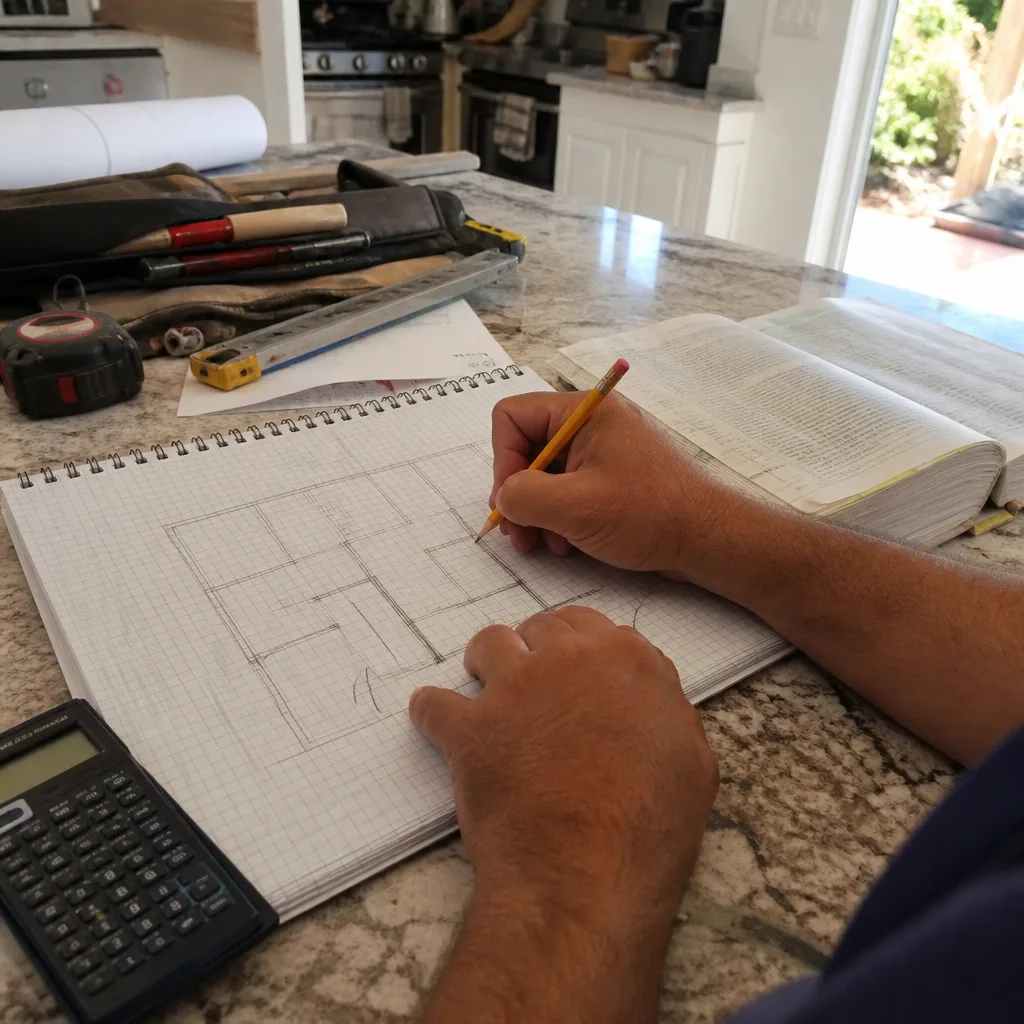
California Business & Professions Code Section 7044 creates an exemption to contractor licensing requirements. An owner of property can act as their own general contractor and pull permits without holding a CSLB license. The statute is straightforward on the front end. The back end is where homeowners get surprised.
Under B&P Code 7044, an owner-builder must:
- Own and occupy the property as their principal residence at the time construction begins
- Obtain all required permits and comply with all local ordinances
- Disclose the owner-builder status on the real estate transfer disclosure statement for five years from the date of final inspection
- Include specific statutory language in any contract with subcontractors, warning them that the owner is not a licensed contractor and that their CSLB remedies may be limited
The five-year disclosure requirement is the clause that does not appear in DIY content. When you sell your Menifee home, the Natural Hazard Disclosure Report and the Transfer Disclosure Statement both contain a specific question about whether any structures were built under an owner-builder permit. Answering “yes” triggers a chain of consequences.
FHA loans require a builder’s certification for structures less than one year old. VA loans require a similar warranty from a licensed builder. Conventional lenders in the Inland Empire increasingly flag owner-builder ADUs in their appraisal review, particularly since the 2022 interest rate shifts tightened underwriting standards. Title insurers in Riverside County have begun excluding coverage for latent defects in owner-built structures, shifting risk to the buyer or killing the deal outright.
The statute also limits the owner-builder’s legal protections. If a subcontractor abandons the job, the owner has no CSLB complaint pathway for a licensed general contractor’s bond. If a worker is injured, the owner’s homeowner’s policy may deny coverage for a commercial construction activity. We’ve reviewed projects in Menifee where the owner-builder spent eighteen months in permit corrections - time that a design-build studio with an established plan-check relationship would have avoided.
ADU Design & Permitting in Menifee requires navigating these statutes before the first wall goes up.
Menifee Plan-Check Requirements Owner-Builders Face
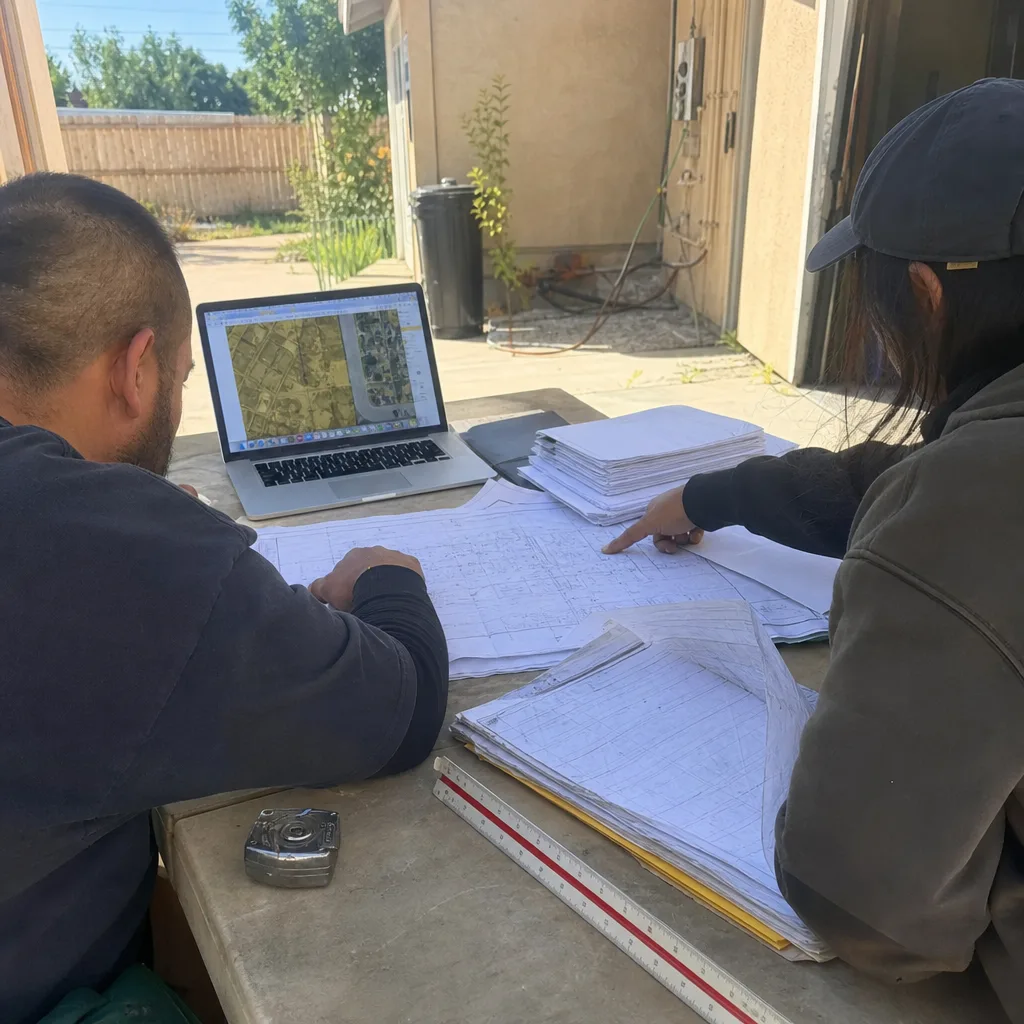
Menifee’s Community Development Department processes ADU permits through a consolidated plan-check that reviews structural, mechanical, electrical, plumbing, and energy compliance in a single submission. The city adopted the 2022 California Building Code with local amendments effective January 2023. What this means for an owner-builder is that the plan set must include stamps from licensed professionals that the owner cannot legally provide themselves.
A complete Menifee ADU permit submittal requires:
- Structural calculations stamped by a California-licensed civil or structural engineer - required for any detached ADU over 120 square feet and any garage conversion with modified roof loads or foundation work
- MEP plans (mechanical, electrical, plumbing) stamped by licensed engineers or certified designers - Menifee enforces Title 24 energy compliance strictly, and the 2022 code cycle added heat-pump water heater requirements that affect electrical panel sizing
- Energy compliance documentation (CF-1R forms) generated by approved software - HERS rater verification is triggered for most ADUs with HVAC
- Soils report for new detached ADUs on expansive clay or fill soils, common in the Romoland and Quail Valley areas of Menifee
- Stormwater compliance plan under the Western Riverside County MS4 permit
An owner-builder can hire each of these professionals individually. The cost is not the obstacle. The coordination is. When the structural engineer specifies a raised foundation to address Menifee’s clay soils and the MEP engineer sizes a 200-amp panel upgrade, those drawings must resolve before plan-check submission. If they conflict, Menifee issues a correction notice and restarts the 15-business-day plan-check clock.
In our experience, owner-builders in Menifee average 3.2 plan-check cycles. Design-build studios with established engineer relationships and template-compliant systems average 1.2 cycles. At $2,800-$4,200 per month in carrying costs (loan interest, property taxes, utilities), each extra cycle costs real money that owner-labor “savings” rarely offset.
Menifee also requires a pre-construction meeting for owner-builder permits, where the building inspector confirms that the owner understands inspection sequencing and that all subcontractors hold valid licenses and workers’ compensation insurance. We’ve attended these meetings where owners discovered, at the permit counter, that their handyman’s “license” was a business license from another city, not a CSLB contractor’s license. The permit holds until proper documentation is provided.
Real DIY Costs vs. Professional Design-Build in Menifee
The gap between perceived DIY savings and actual ADU costs in Menifee is where most owner-builder budgets fail. We price projects in Menifee against a cost database built from 900+ ADUs since 2015. The numbers do not support the narrative that owner labor cuts project cost in half.
Here is a realistic comparison for a 500-square-foot garage conversion ADU in Menifee, 2024 market:
| Cost Category | Owner-Builder (Self-Managed) | Design-Build Contract |
|---|---|---|
| Architectural drawings & permit set | $4,500-$7,000 | Included in contract |
| Structural engineering | $2,800-$4,200 | Included in contract |
| MEP engineering & Title 24 | $3,200-$5,000 | Included in contract |
| Plan-check & permit fees (Menifee) | $3,500-$5,500 | $3,500-$5,500 |
| Foundation repair/reinforcement | $4,000-$8,000 | $4,000-$8,000 |
| Framing & structural | $18,000-$26,000 (subcontracted) | $18,000-$26,000 |
| Electrical panel upgrade & rough | $6,500-$10,000 (subcontracted) | $6,500-$10,000 |
| Plumbing rough & fixtures | $5,500-$8,500 (subcontracted) | $5,500-$8,500 |
| HVAC (mini-split, Title 24 compliant) | $4,000-$6,500 (subcontracted) | $4,000-$6,500 |
| Insulation & drywall | $5,000-$7,500 | $5,000-$7,500 |
| Owner labor (finish paint, flooring, fixtures, landscaping) | $0 labor cost, $3,000-$5,000 materials | $4,500-$7,500 subcontracted |
| Project management & coordination (owner time) | 400-600 hours at $0 direct cost | Included in contract |
| Corrective work from inspection failures | $2,000-$8,000 (typical range) | $0-$2,000 (under warranty) |
| Total realistic range | $62,000-$96,000 + 400-600 hours | $74,000-$103,000 |
The owner-builder saves $8,000-$15,000 in finish labor if their own time is valued at zero. Against that savings: the cost of plan-check cycles, the risk of subcontractor default, the insurance gap, and the five-year resale disclosure. For a homeowner who plans to sell within seven years - common in Menifee’s military and commuter demographics - the math reverses.
Garage Conversion ADU in Menifee typically runs $148-$206 per square foot all-in, drawings through final inspection, with the written price fixed before work starts under Haven Standard Clause 1.
The Insurance Gap: Owner-Builder vs. Contractor Permit
Insurance is the silent variable in the DIY-versus-professional calculation. Most Menifee homeowners assume their existing policy covers the ADU construction. The policy does not - or does not in the ways that matter.
During construction, a standard HO-3 homeowner’s policy covers the existing dwelling and personal property. It does not extend to commercial construction activity by unlicensed owner-builders. If a worker falls from a roof, the owner’s policy may deny the claim as a business exclusion. If a fire starts from temporary electrical, the insurer may subrogate against the owner for negligent workmanship. General liability policies for owner-builders exist but cost $2,800-$4,500 for a six-month term and require the owner to name every subcontractor as additional insured.
A licensed general contractor carries workers’ compensation (required by CSLB for any employee, strongly advised for sole proprietors working on ADUs) and general liability with per-occurrence limits typically at $1 million. The homeowner is named as additional insured. The policy responds to construction-phase incidents without touching the homeowner’s personal coverage.
After construction, the gap widens. A rental income policy (DP-3 or landlord policy) for an ADU tenant requires proof of permit final and, increasingly, a certificate of occupancy issued under a licensed contractor’s permit. Owner-builder permits trigger underwriting questions that can double premiums or require a four-point inspection at the owner’s expense. In Menifee’s fire hazard severity zones - particularly the hillside areas near La Cresta and the Santa Rosa Plateau viewshed - some admitted carriers will not write new policies on owner-built detached structures at all.
The 365-Day Done Right Promise from Ellery ADU Studio Menifee home includes documentation that satisfies insurer requirements: permitted drawings, inspection sign-offs, and a final photo record.
The Hybrid Model: Owner as Project Manager
Some Menifee homeowners attempt a middle path: hiring licensed subcontractors directly while managing the project themselves. This model appears rational. It is higher-risk than it looks on paper.
The hybrid owner-manager assumes responsibility for:
- Scheduling sequential trades so that each contractor’s work is complete and inspectable before the next arrives - in Menifee, the inspection sequence is foundation/under-slab, rough framing, rough MEP, insulation, drywall, final MEP, final building
- Holding retainage (typically 10%) until final inspection and lien release - without a prime contract, the owner has no statutory mechanism to withhold payment from a subcontractor who abandons the job
- Verifying that each subcontractor’s license is active, their bond is current, and their workers’ compensation policy names the owner as additional insured - a fifteen-minute check that most owners skip
- Coordinating change orders when field conditions differ from plans - Menifee’s clay soils and older slab conditions in Sun City and Quail Valley neighborhoods generate surprises that require immediate engineering review
Menifee’s inspection sequence is unforgiving of scheduling errors. If the rough electrical inspector finds a panel location that conflicts with the structural engineer’s shear wall schedule, the correction requires both trades to return. With a general contractor, that coordination is contractually obligated. With owner-managed subs, the electrician’s next availability may be three weeks out, and the plumber may refuse to reschedule around the delay without a change order.
We’ve reviewed hybrid projects in Menifee that took fourteen to twenty months from permit to final. Our design-build timeline for comparable projects is five to seven months. The carrying cost difference - loan interest, extended temporary housing, delayed rental income - typically exceeds any subcontractor margin the hybrid model “saved.”
Prefab and modular systems from brands like Abodu or Cover reduce some coordination risk by factory-building the structure, but site prep, foundation, utility connection, and final inspection still require licensed trades and local knowledge. Ellery specifies and coordinates these systems within the same single contract, so the factory warranty and the site work share a single point of accountability.
Where DIY Saves Money (and Where It Doesn’t)
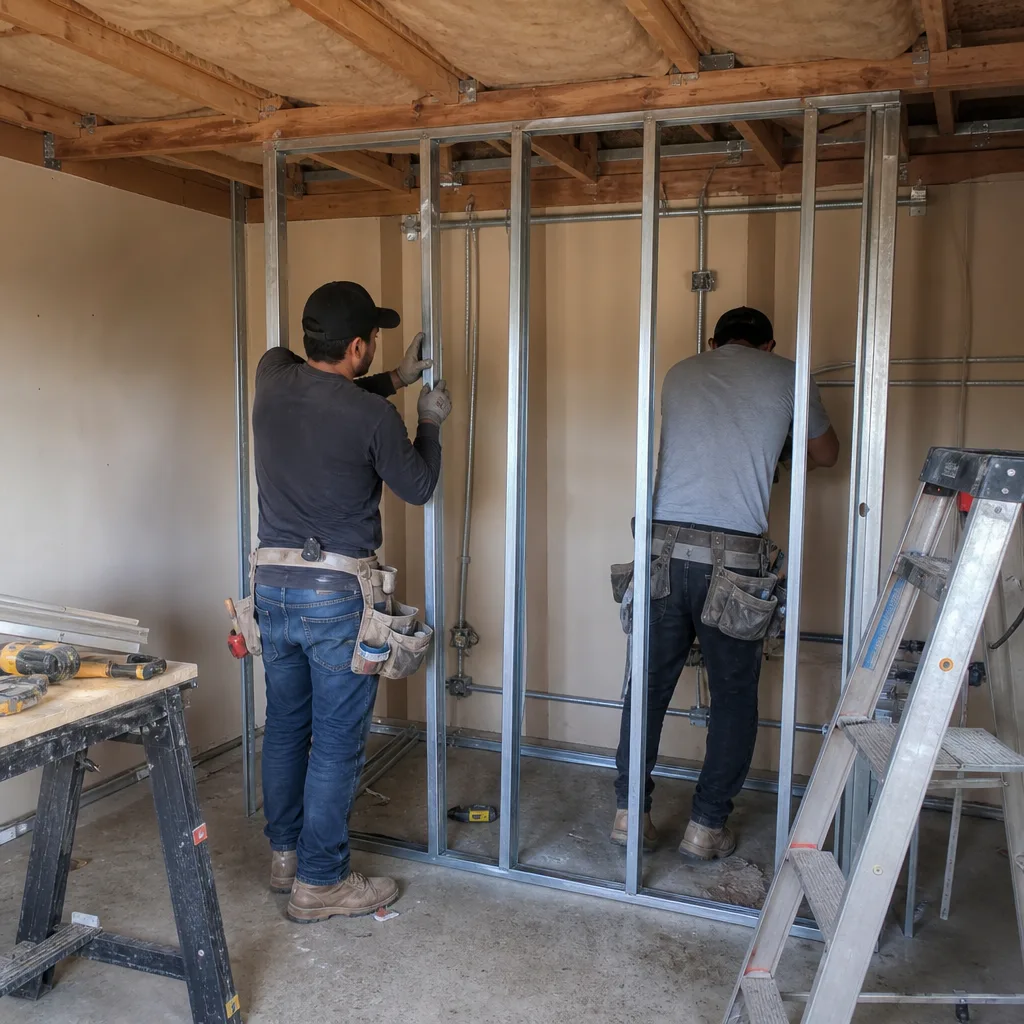
Owner labor has legitimate value in specific phases of an ADU project. The error is assuming that value extends to work regulated by code and inspected for safety.
Where DIY saves real money:
- Interior finish painting - no permit, no inspection, owner timing is flexible
- Landscaping and hardscaping outside the ADU footprint - Menifee’s water-efficient landscape ordinance applies, but does not require a licensed contractor for residential compliance
- Fixture and finish selection - owners who research and purchase their own tile, cabinets, and lighting avoid contractor markup, typically 15-25% on materials
- Final cleaning and punch-list items - owner labor at $0/hour beats any subcontractor rate
Where DIY does not save money:
- Framing - Menifee requires engineered lumber schedules for spans over 12 feet; field modifications without engineer approval fail inspection
- Electrical - CSLB C-10 license required; owner-builder cannot legally perform this work themselves in California
- Plumbing - CSLB C-36 license required; gas line work requires additional certification
- HVAC - Title 24 compliance documentation must be signed by a licensed contractor or certified technician; owner-installed mini-splits fail HERS verification without proper commissioning
- Foundation work - Menifee’s expansive soils trigger engineered solutions; owner-dug trenches without soils verification risk slab failure and permit revocation
The pattern is clear. DIY saves on aesthetic choices. It does not save on regulated systems. And the regulated systems constitute 60-70% of project cost in a typical Menifee ADU.
New Detached ADU in Menifee involves more regulated systems than conversions, which amplifies the DIY risk.
Resale, Financing, and Title Insurance Consequences
The five-year disclosure clock under B&P Code 7044 starts at final inspection, not at permit issuance. An owner-builder who completes their ADU in 2024 cannot sell without disclosure until 2029. In Menifee’s market, where the average homeowner tenure is 6.8 years, that constraint affects most sellers.
The disclosure itself reads: “This property contains construction completed under an owner-builder permit. The work was not performed by a licensed contractor and may not be covered by standard warranties.” That language appears on the Transfer Disclosure Statement, the Natural Hazard Disclosure Report, and any supplemental disclosure the seller’s agent prepares.
Buyer’s lender responses vary:
- FHA: Requires builder’s warranty for structures under one year old; owner-builder status disqualifies the property from FHA insurance if the ADU is the primary dwelling or a significant portion of value
- VA: Similar builder warranty requirement; owner-builder ADUs in Menifee’s military-heavy market (Camp Pendleton commuters, March Air Reserve Base transfers) face automatic scrutiny
- Conventional (Fannie/Freddie): No explicit ban, but appraisal guidelines require the appraiser to note owner-builder status and adjust for warranty and defect risk; we’ve seen $15,000-$25,000 adjustments in Menifee comparable sales
- Jumbo and portfolio lenders: Increasingly require third-party structural inspection of owner-built ADUs, at seller or buyer expense
Title insurance adds another layer. Standard ALTA policies cover title defects, not construction defects. Extended coverage endorsements for new construction typically exclude owner-builder work. In Riverside County, First American and Fidelity National have both issued underwriting bulletins requiring specific owner-builder disclosures before issuing lender’s policies.
The practical effect: an owner-builder ADU can reduce the buyer pool, extend time on market, and force price concessions that erase years of “saved” labor. For a homeowner who built to generate rental income and equity, this is a catastrophic outcome that no YouTube tutorial mentions.
Common Mistakes to Avoid
- Assuming the owner-builder permit saves permit fees. Menifee charges identical plan-check and inspection fees regardless of permit type. The savings are in contractor margin, not city costs - and that margin covers coordination, warranty, and risk transfer that the owner now assumes.
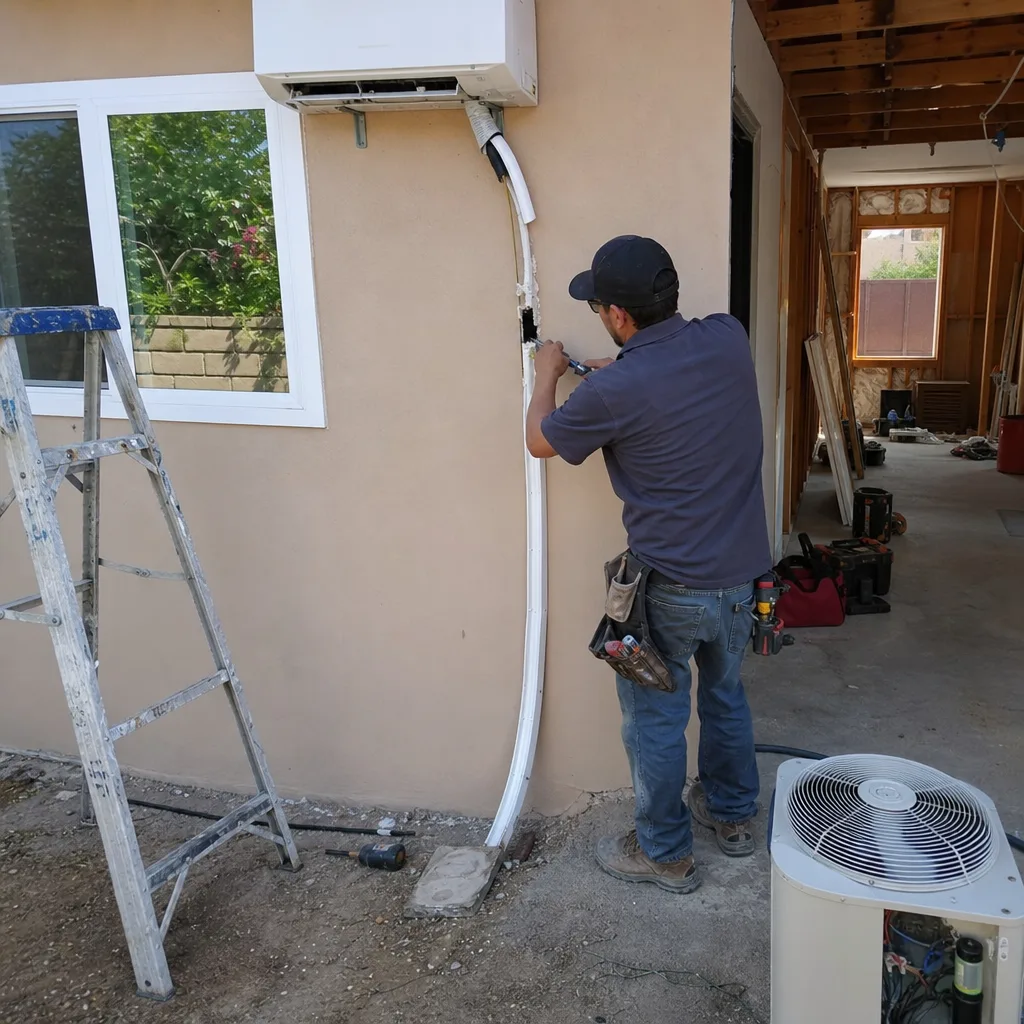
- Hiring unlicensed “handymen” for electrical or plumbing. CSLB sting operations in Riverside County regularly cite homeowners who permit as owner-builders then hire unlicensed workers. The fine falls on the owner, and the work must be removed and redone by a licensed contractor.
- Skipping the soils report in Romoland or Quail Valley. Menifee’s geotechnical requirements are zone-specific. Owners who assume their flat lot is “fine” often discover expansive clay or undocumented fill during foundation inspection, triggering a stop-work order and $3,000-$6,000 in unplanned engineering.
- Underestimating inspection sequencing. Menifee’s building division does not schedule same-day re-inspections. A failed rough inspection pushes the project back two weeks minimum. Owner-builders without established inspector relationships fail at higher rates than contractors who know the local interpretation of code.
- Ignoring the insurance gap until a claim occurs. Homeowner’s policies exclude commercial construction. Owner-builders who rely on their existing coverage discover the exclusion after a loss, when it is too late to secure retroactive protection.
- Valuing owner time at zero. Six hundred hours of project management at any reasonable opportunity cost - rental income from the completed ADU, overtime at a day job, or simply quality of life - is not free. It is the largest hidden cost in owner-builder accounting.
When to Call a Professional
Call a licensed design-build studio when the project involves structural modification, MEP systems, or any plan-check submission in Menifee. Call when you plan to rent the ADU and need insurable, financeable construction. Call when your timeline matters, when your resale horizon is under ten years, or when the permit set requires engineering stamps you cannot legally provide.
Ellery ADU Studio Menifee offers free estimates in Menifee. Every project is quoted with a written price before any work begins, per Haven Standard Clause 1. We also provide a Free Second Opinion on any written estimate already in hand - useful for homeowners who have started the DIY research and want to verify their assumptions against a documented permit history. Call (951) 528-2967 to schedule.
Frequently Asked Questions
A professional design-build ADU in Menifee typically runs $148-$206 per square foot for garage conversions and $195-$280 per square foot for new detached units, all-in from drawings through final inspection. DIY owner-builder projects in our tracking average 8-15% below these ranges in direct costs but add 400-600 hours of owner management and carry higher risk of cost overruns from inspection failures and permit delays. Call (951) 528-2967 for a written quote on your specific site - estimates are free, and the price is fixed before work starts.
Yes, under California B&P Code 7044, but only if you own and occupy the property as your principal residence, obtain all required permits, and disclose the owner-builder status for five years at resale. You cannot perform electrical, plumbing, or HVAC work yourself - these require licensed subcontractors. The permit set must still include engineer stamps that you cannot legally provide.
Yes, for five years from final inspection. The disclosure requirement limits buyer financing options and may trigger appraisal adjustments or title insurance exclusions. In Menifee’s market, where FHA and VA loans are common among military and first-time buyers, this can significantly reduce the pool of qualified purchasers.
Menifee’s plan-check desk requires licensed engineer stamps for structural calculations on all detached ADUs and garage conversions with modified loads, and for MEP compliance documentation under Title 24. An owner-builder must hire these professionals separately; the cost is typically $8,000-$14,000 for a complete permit set, not including architectural drawings.
During construction, you need a commercial general liability policy naming all subcontractors as additional insured, plus verification that each subcontractor carries workers’ compensation. Your homeowner’s policy will not cover construction-phase incidents. After completion, rental income policies may require additional inspections or charge higher premiums for owner-built structures. Standard carriers in Menifee’s fire hazard zones may decline coverage entirely.
Prefab systems from brands like Dvele or Mighty Buildings reduce on-site construction time but do not eliminate the need for licensed site work, foundation engineering, utility connection, and Menifee plan-check approval. Factory warranties cover the module, not the site prep or installation. Coordinating factory delivery with local inspection sequencing is a specialized skill that most owner-builders underestimate.
Ellery ADU Studio’s design-build projects in Menifee average five to seven months from permit issuance to final inspection. Owner-builder projects in our tracking average twelve to twenty months, with the variance driven by plan-check cycles, subcontractor scheduling conflicts, and inspection failures. Each month of delay costs approximately $2,800-$4,200 in carrying costs for a typical financed project.
The Bottom Line
The DIY-versus-professional question for Menifee ADUs is not about skill or ambition. It is about risk allocation, time value, and the legal and financial consequences that follow construction for years after the final walkthrough. California’s owner-builder statute creates a permissible path with hidden obligations: five years of resale disclosure, engineer-stamped plans the owner cannot produce, insurance gaps that surface only at claim time, and inspection sequences that punish scheduling errors. Real savings from owner labor are limited to finish work that does not affect safety, code compliance, or insurability. For the structural, mechanical, and permitting core of the project, professional design-build transfers risk, fixes price in writing, and delivers documentation that protects resale value. That is the calculation that matters.
Written by Nadia Ellery, Owner at Ellery ADU Studio Menifee, serving Menifee since 2015.